Menu
Download our Petland App today for information on your local Petland's Available Pets and Pet Supplies. All at the tips of your fingers!


Download our Petland App today for information on your local Petland's Available Pets and Pet Supplies. All at the tips of your fingers!
Please create a free account below, or login by clicking here.
Petland Overland Park, Kansas
October 17, 2026
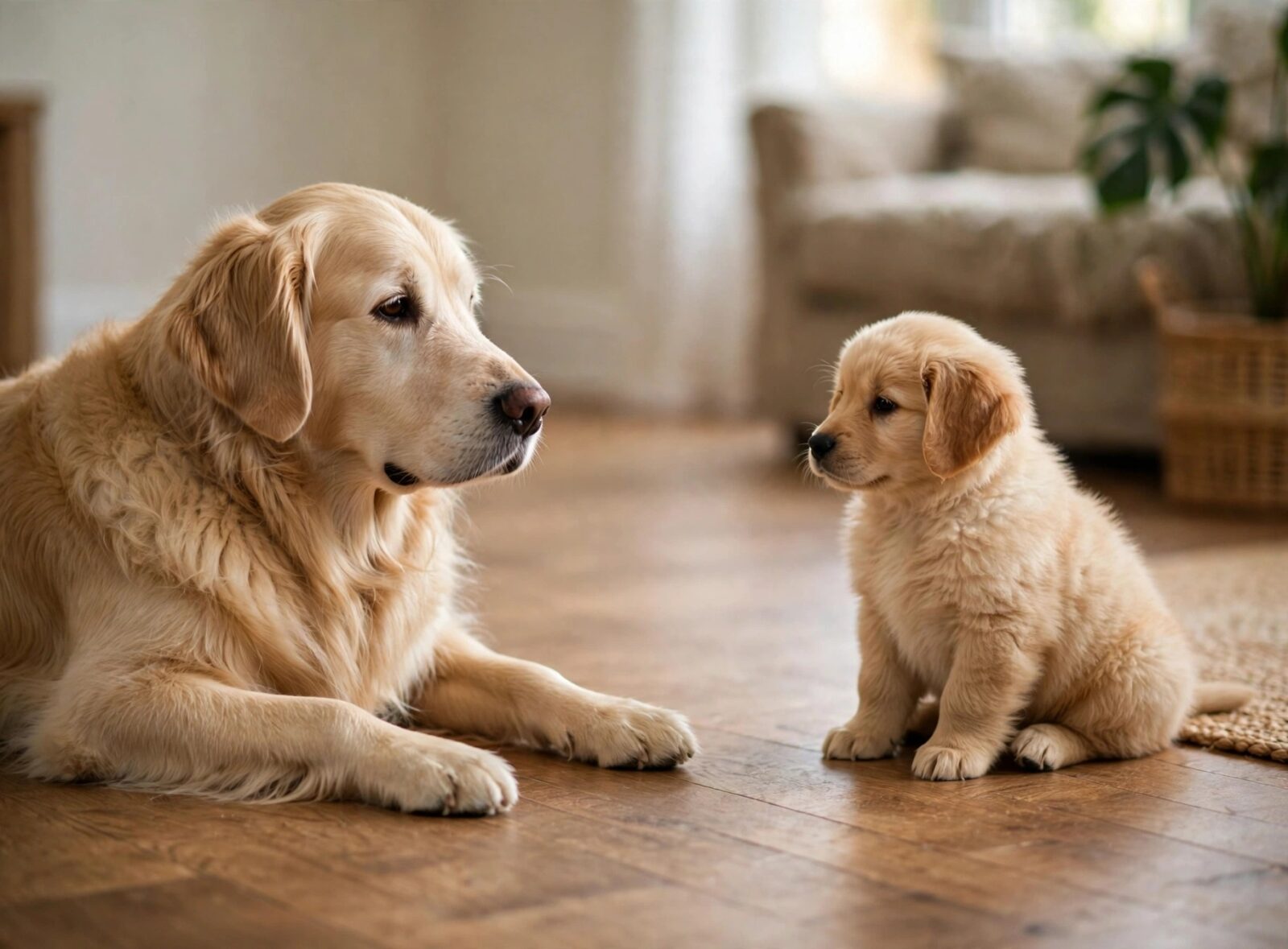
The scene plays out in thousands of living rooms every year. A family carries a new puppy through the front door, sets them down in front of the dog who has lived there for seven years, and waits for the heartwarming moment.
Sometimes it happens. Often what happens instead is an older dog who freezes, stiffens, then retreats under a table and refuses to come out for the rest of the evening. Or an older dog who growls, and a family who panics and concludes their gentle companion has turned aggressive.
Neither outcome means the dogs will not get along. It means the introduction was rushed. How you introduce puppy to older dog in the first week determines the relationship for years, and the single most reliable predictor of success is whether the first meeting happened on neutral ground or in the older dog’s living room.
This guide lays out the staged approach: what to do before the puppy arrives, how to run the first meeting, how to structure the first week at home, and which behaviors mean things are going fine versus which mean you need to slow down.
Dogs hold a strong sense of territory, and the strength of that feeling is not about dominance or hierarchy in the way popular dog training once framed it. It is simpler than that. Your older dog has spent years learning that this house is predictable, that resources here are reliable, and that nothing arrives without warning.
A puppy appearing in the middle of that space, with no warning and no escape route, is a territorial intrusion from your older dog’s point of view. The resulting defensiveness is a normal response to a badly managed situation rather than a character flaw.
Neutral ground removes the territory question entirely. In a park, a quiet street or a friend’s yard, your older dog has no resources to defend and no established patterns to protect. The meeting becomes about the other dog rather than about the space, and that is a far easier first conversation.
There is a second reason the staged approach matters. Puppies have no social skills yet. An eight-week-old will bounce directly into an older dog’s face, grab an ear, and ignore every polite signal the adult sends. An older dog who corrects that behavior with a growl or a quick air snap is teaching the puppy manners, which is appropriate and useful. But an older dog who is already stressed by a territorial intrusion has less patience available for that teaching, and the correction can escalate past what it should be.
Set this up in the days before pickup, not the morning of.
Give your older dog a private space. A room, a crate in a quiet corner, or a gated area the puppy physically cannot access. This is non-negotiable. Your older dog needs somewhere to go where the puppy cannot follow, and knowing that space exists does more for their stress level than anything else you do.
Feed separately from day one. Set up two feeding locations in different rooms, or feed in crates. Food is the most common flashpoint between a resident dog and a newcomer, and preventing the problem is trivially easy compared to fixing it.
Pick up high-value items. Favorite chews, bones, special toys, and anything your older dog has shown possessiveness about. Put them away for the first two weeks. Reintroduce them later, separately, in each dog’s own space.
Add a second set of everything. Two water bowls, two beds, two sets of toys, placed apart. Scarcity creates conflict; abundance removes the reason for it.
Refresh your older dog’s basics. Spend the week before practicing sit, down, come and a solid leave it. You will use all four during introductions, and a dog who responds reliably gives you a way to interrupt escalating moments without physical intervention.
Be realistic about your older dog. A nine-year-old with arthritis genuinely cannot tolerate a puppy jumping on them, and no amount of good introduction technique changes that. A dog who has shown real aggression toward other dogs in the past needs professional help before a puppy arrives, not after. Honest assessment now is kinder to both animals.
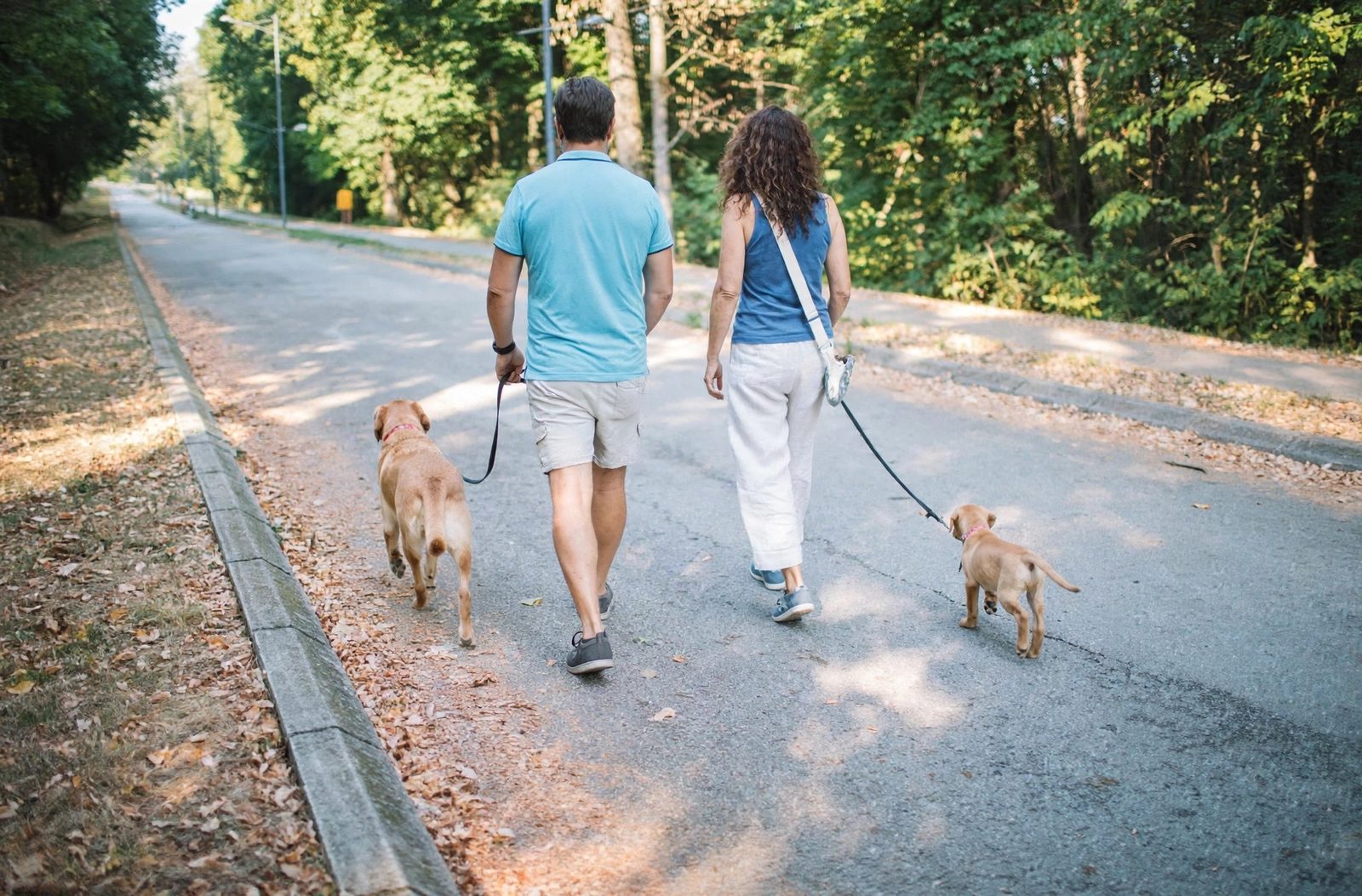
Plan for two people. One handles each dog.
Choose a quiet outdoor space neither dog considers theirs. A low-traffic park, a quiet residential street, a friend’s fenced yard. In the Kansas City metro, a quieter corner of a neighborhood park in the early morning works well; avoid busy dog parks entirely, both for the distraction and because your puppy’s vaccinations may not be complete.
Here is the sequence.
Step one: parallel walking, no contact. Start the dogs about twenty feet apart, both on leash, walking in the same direction. Not toward each other. Side by side, with distance. Walk for five to ten minutes. The goal is for each dog to become aware of the other while being entirely occupied with walking. This sounds too simple to matter and it is the most effective single step in the whole process.
Step two: narrow the gap gradually. Over the next five minutes, bring the dogs closer, fifteen feet, then ten, then six, still walking parallel. Watch both dogs. Loose bodies, soft tails, occasional glances at each other, continued interest in sniffing the ground: all good. Stiffening, hard staring, raised hackles, or a tail held high and rigid: back up to the previous distance and stay there longer.
Step three: brief sniff, then separate. Let the dogs approach and sniff for three to five seconds, then calmly walk them apart again. Three seconds. That short interruption is deliberate, because the first greeting is when most tension builds, and ending it before it builds teaches both dogs that proximity is brief and uneventful.
Step four: repeat the brief greeting several times. Three or four short sniffs with walking in between beats one long tense standoff.
Step five: walk home together. If the brief greetings went well, walk both dogs home side by side, ideally entering the house at the same time rather than one leading the other in.
Keep leashes loose throughout. A tight leash transmits your tension straight to the dog and physically restricts the body language they use to communicate. Hold slack, and if you need to create distance, walk rather than pull.
Here is where most families relax too early. The meeting went well, so they let both dogs loose in the house together and go about their evening.
The first week should instead look like deliberate, managed access.
Days one and two. Baby gates stay up. The dogs see and smell each other constantly but interact only in short supervised sessions, five to ten minutes, three or four times a day. Every session ends while both dogs are still doing well, not after something goes wrong. Separate for all meals, all naps, and any time you leave the room.
Days three and four. Lengthen supervised sessions to fifteen or twenty minutes. Start introducing short play if both dogs are offering play signals: loose bouncy movement, play bows, exaggerated gestures. Interrupt play every few minutes with a brief pause, which prevents the arousal spiral that turns play into something less friendly.
Days five through seven. Longer shared time with you present and attentive. The dogs still separate when you leave the house and overnight. Your older dog’s private space remains available at all times.
Week two onward. Gradually extend unsupervised time in short increments, starting with ten minutes while you are in the next room. Most pairs are reliably fine together by week three or four. Some take longer, and that is normal rather than a sign of failure.
Throughout, protect your older dog actively. If the puppy is pestering and your older dog has disengaged, walked away, or gone still, you intervene. Do not wait for the growl and then scold the older dog for growling. A growl is information, and punishing it teaches a dog to skip the warning next time, which is genuinely dangerous.
| What you see | What it means | What to do |
| Loose body, wagging low tail, play bow | Comfortable, inviting play | Allow, supervise |
| Brief sniff then disengage | Normal, healthy boundary | Nothing, this is good |
| Older dog walks away | Setting a limit appropriately | Block puppy from following |
| Growl, no escalation | Clear communication | Separate calmly, do not scold |
| Lip curl or air snap at puppy | Correcting puppy rudeness | Separate, shorten sessions |
| Stiff body, hard stare, still tail | Real tension building | Increase distance immediately |
| Raised hackles with stiffness | Significant stress | End session, slow the whole plan |
| Older dog hiding or not eating | Stress beyond normal adjustment | More separation, consult a trainer |
| Resource guarding over food or toys | Needs management, not correction | Full separation for resources |
| Sustained snarling, lunging, pinning | Serious, do not manage alone | Professional help now |
The distinction worth internalizing is between correction and aggression. An older dog who turns, curls a lip, and delivers a quick noisy air snap when a puppy bites their ear is parenting. The puppy yelps, backs off, and learns something valuable. That is not a fight and it does not need your intervention beyond briefly separating them. Sustained attacks where the older dog pursues the puppy, pins them, or will not disengage are a different category entirely and need a professional.
Letting the puppy pester an older dog unchecked. The most frequent cause of a genuinely soured relationship. An older dog who learns that you will not protect them starts handling it themselves, and their methods are blunter than yours.
Scolding the older dog for growling. Removes your early warning system. Growls are valuable.
Forcing interaction. Carrying the puppy over to the older dog, holding dogs in place for a greeting, or physically pushing them together creates the exact tension you are trying to avoid.
Reducing attention to the older dog. New puppies absorb enormous attention, and resident dogs notice. Deliberately spend time alone with your older dog daily: a walk without the puppy, a training session, fifteen quiet minutes. This matters more than most people expect.
Moving too fast after a good first meeting. A successful neutral-ground introduction is the start of the process rather than the end of it.
Skipping the older dog’s exercise. A tired older dog tolerates a puppy far better than a bored, underexercised one.
Your older dog does a lot of the socialization work, but not all of it. A puppy who only ever interacts with one familiar adult dog does not learn how to read unfamiliar dogs, which matters later at the vet, on walks and in boarding situations.
Structured exposure to other appropriate puppies and calm adult dogs, once vaccinations allow, fills that gap. Our guide to Puppy Play Dates: Making New Furry Friends the Fun, Safe Way covers how to set those up without overwhelming a young puppy, and the broader framework in Best Ways to Socialize Your New Puppy explains why the first four months carry so much weight.
For families who want to make playdates a regular part of the routine rather than a one-off, How Often Do You Have Doggy Playdates is worth a read on finding a sustainable rhythm.
Nearly every failed attempt to introduce puppy to older dog shares the same two mistakes: the first meeting happened inside the house, and the family moved to unsupervised shared time within a day or two. Fix those two things and the odds shift dramatically.
Meet on neutral ground. Walk parallel before you let them greet. Keep greetings to a few seconds. Then spend a full week on gated, supervised, deliberately short sessions, with your older dog’s private space always available and every resource duplicated. It feels like overkill on day three. By week four, when the two of them are napping in the same room without incident, it will have been worth it.
Adding a puppy to a household that already has a dog takes planning, and the team at Petland Kansas City is happy to talk through your specific situation before you commit. Tell us about your resident dog’s age, temperament and history with other dogs, and we can help you think about which puppies are likely to be a good fit. Visit us in Overland Park, or come meet the puppies and bring your questions.
Where should my older dog and new puppy meet for the first time?
On neutral ground, outdoors, somewhere neither dog considers their territory. A quiet park, a low-traffic street, or a friend’s fenced yard all work. Meeting inside your home puts your older dog in a position of defending their space, which creates tension that has nothing to do with how they actually feel about the puppy.
How long does it take for an older dog to accept a new puppy?
Most pairs reach comfortable coexistence in three to four weeks, with genuine friendship often developing over two to three months. Some older dogs tolerate rather than love a puppy, and that is a perfectly fine outcome. If you are seeing no improvement at all after four to six weeks, it is worth consulting a trainer.
Is it normal for my older dog to growl at the puppy?
Yes, and it is usually a good sign rather than a bad one. A growl means your older dog is communicating a boundary clearly instead of escalating straight to something physical. Never punish growling, because that teaches a dog to skip the warning. Separate the dogs calmly, give your older dog space, and shorten your supervised sessions.
Should I let my older dog correct the puppy?
Brief corrections like a lip curl, a quick air snap or a short noisy warning are appropriate and genuinely useful, since this is how puppies learn dog manners. What you should not allow is sustained pursuit, pinning, or any correction the older dog will not disengage from. Your job is also to intervene before the puppy becomes so pestering that correction is needed.
How do I stop my puppy from annoying my older dog?
Manage the environment rather than relying on the puppy’s self-control, which does not exist yet. Use baby gates, keep sessions short, interrupt play every few minutes, and physically block the puppy from following your older dog when they walk away. Also ensure the puppy is getting enough exercise and enrichment elsewhere, because a puppy with nothing to do will target the older dog.
Do I need to feed my dogs separately?
Yes, at minimum for the first several weeks, and permanently if either dog shows any possessiveness around food. Feed in different rooms or in crates. Food conflict is the most common serious problem between a resident dog and a newcomer, and it is almost entirely preventable with a two-room feeding setup.
My older dog seems depressed since the puppy arrived. What should I do?
Increase one-on-one time with your older dog immediately: a daily walk without the puppy, a short training session, quiet time in their own space. Also verify they have genuine refuge the puppy cannot reach and that they are not being pestered during naps. Withdrawal, appetite loss or hiding that continues beyond two weeks warrants a conversation with your veterinarian to rule out a physical cause.
"*" indicates required fields