Menu
Download our Petland App today for information on your local Petland's Available Pets and Pet Supplies. All at the tips of your fingers!


Download our Petland App today for information on your local Petland's Available Pets and Pet Supplies. All at the tips of your fingers!
Please create a free account below, or login by clicking here.
Petland Overland Park, Kansas
October 28, 2026
Kansas City winters are not subtle. January lows sit in the low twenties with regularity, wind chill drives that well below, and the metro area salts roads and sidewalks heavily from December through February. For a four-month-old puppy taking their first walks of the season, that combination presents three separate problems: body heat, paw protection, and the chemical residue on every sidewalk between here and the corner.
The question of what winter dog gear a puppy actually needs gets muddled by two opposite kinds of bad advice. One says dogs are animals and need nothing. The other says every dog needs a full snowsuit, boots and a heated bed. Neither is right, and which is closer depends almost entirely on your puppy’s coat type, body size and age.
Here is the honest version: some puppies genuinely need a coat in a Kansas City winter and some are actively uncomfortable wearing one. Most puppies do not need boots but almost all need paw care. And the single most useful winter purchase is not a coat at all.
Three factors decide it: coat type, body mass, and age.
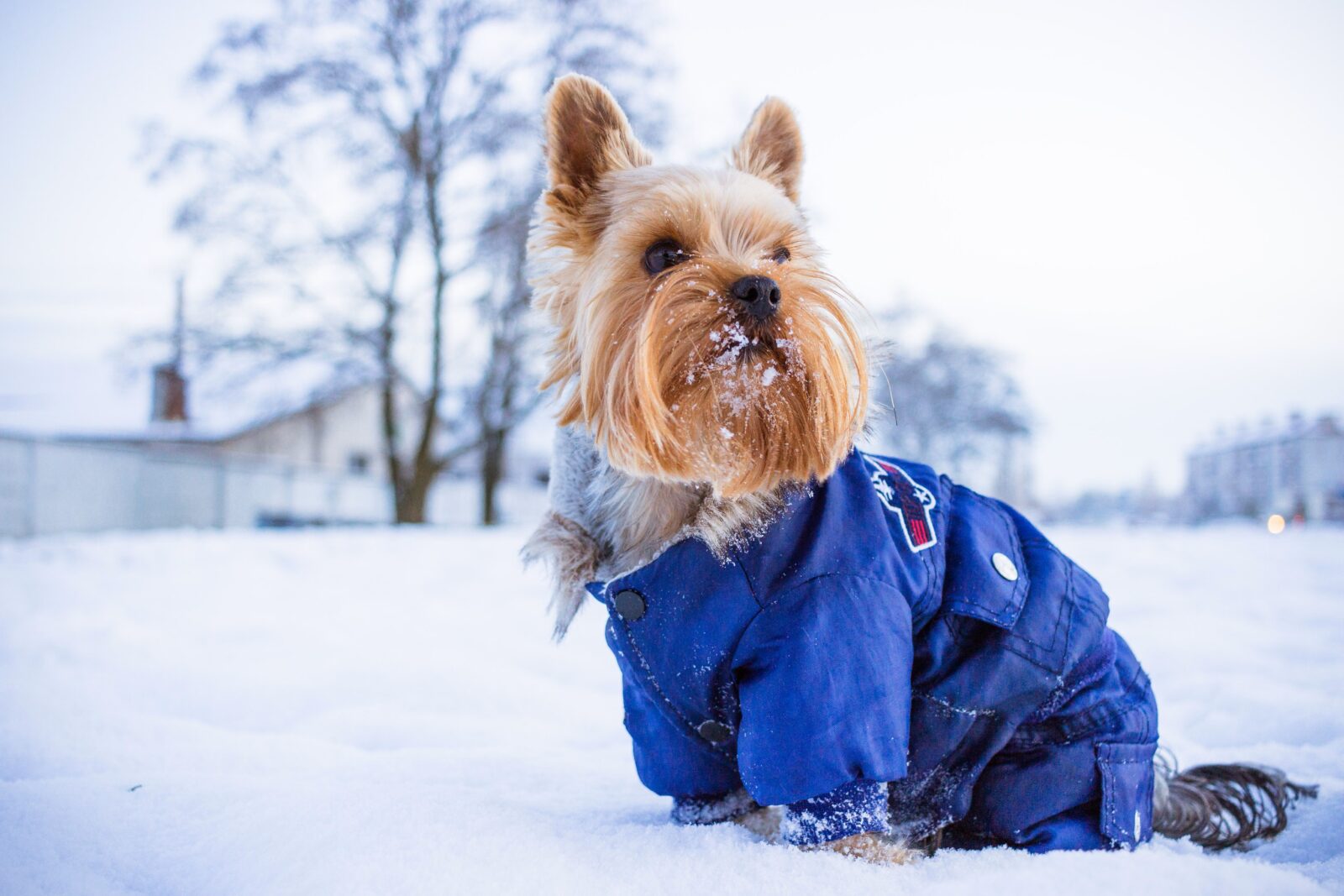
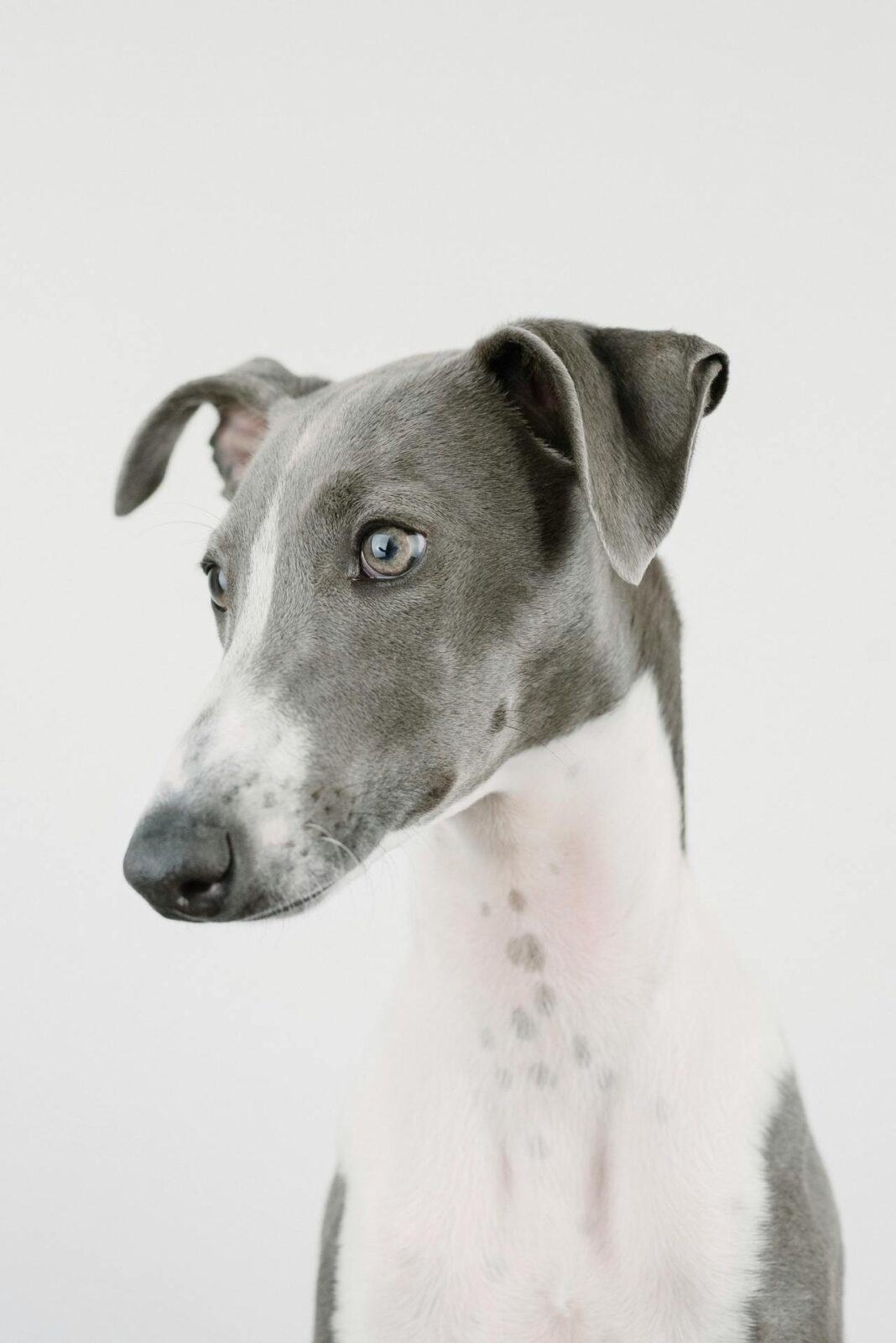
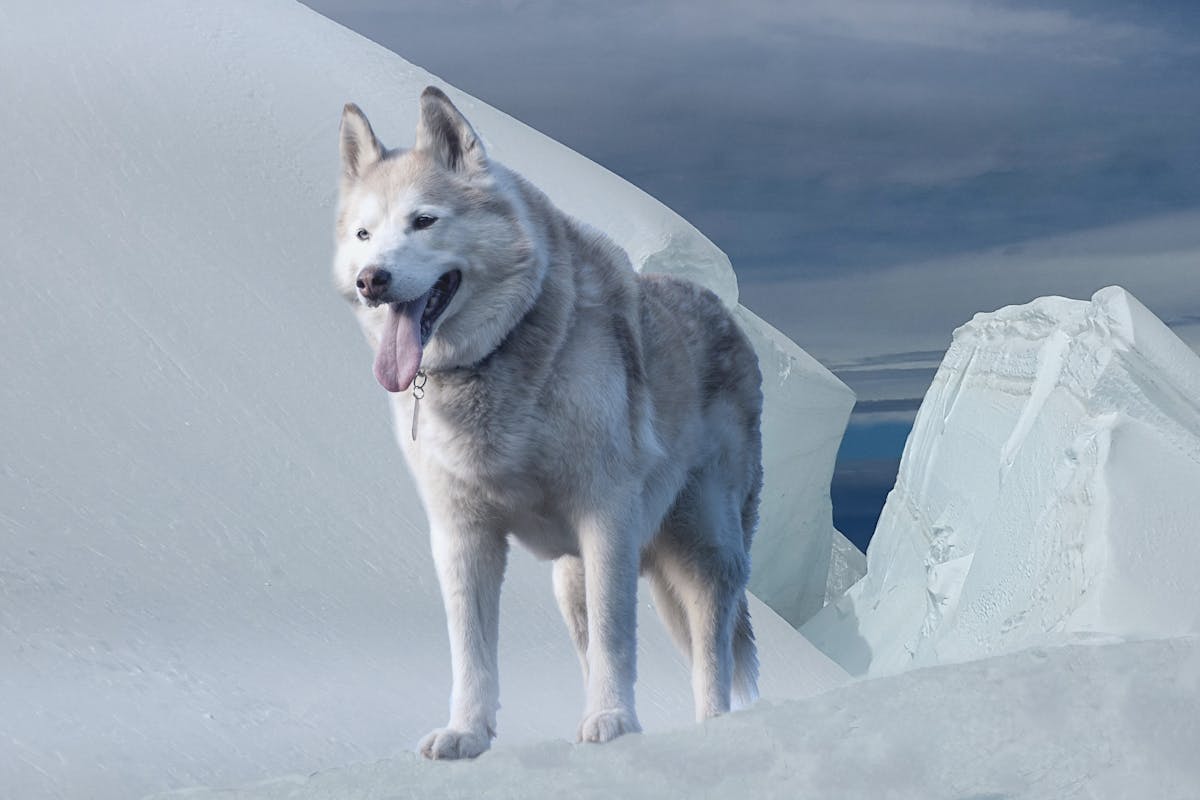
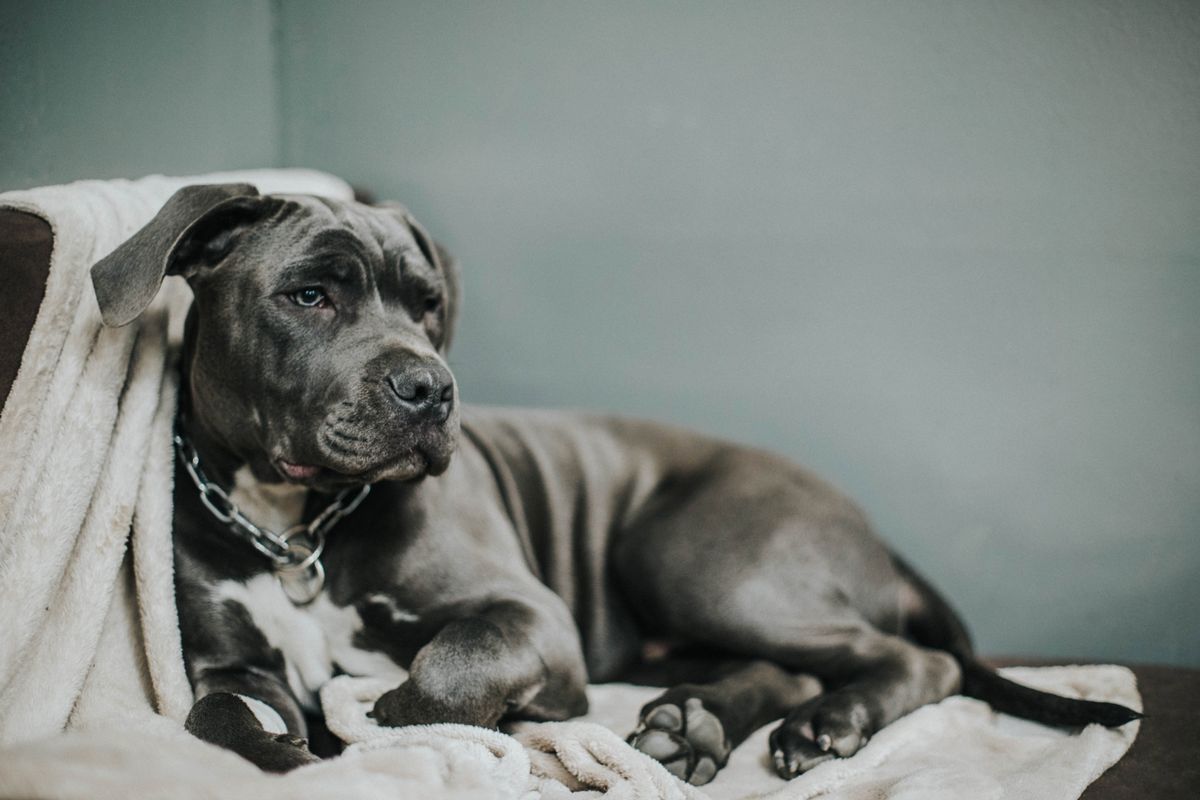
Coat type matters most. A double-coated breed has a dense insulating undercoat beneath a weather-resistant outer layer, which is a genuinely effective system. A Husky, Samoyed, Malamute, German Shepherd or Bernese Mountain Dog in a Kansas City winter is comfortable without anything, and putting a coat on one can cause overheating. A single-coated breed has no undercoat and no insulation. A Greyhound, Whippet, Boxer, Pit Bull type, Chihuahua, Yorkie, Dachshund or Doodle with a thin clipped coat genuinely feels the cold.
Body mass matters because small animals lose heat faster relative to their size. A six-pound Yorkie loses body heat at a far higher rate than a sixty-pound Labrador in identical conditions. This is why toy breeds need coats even when their fur looks adequate.
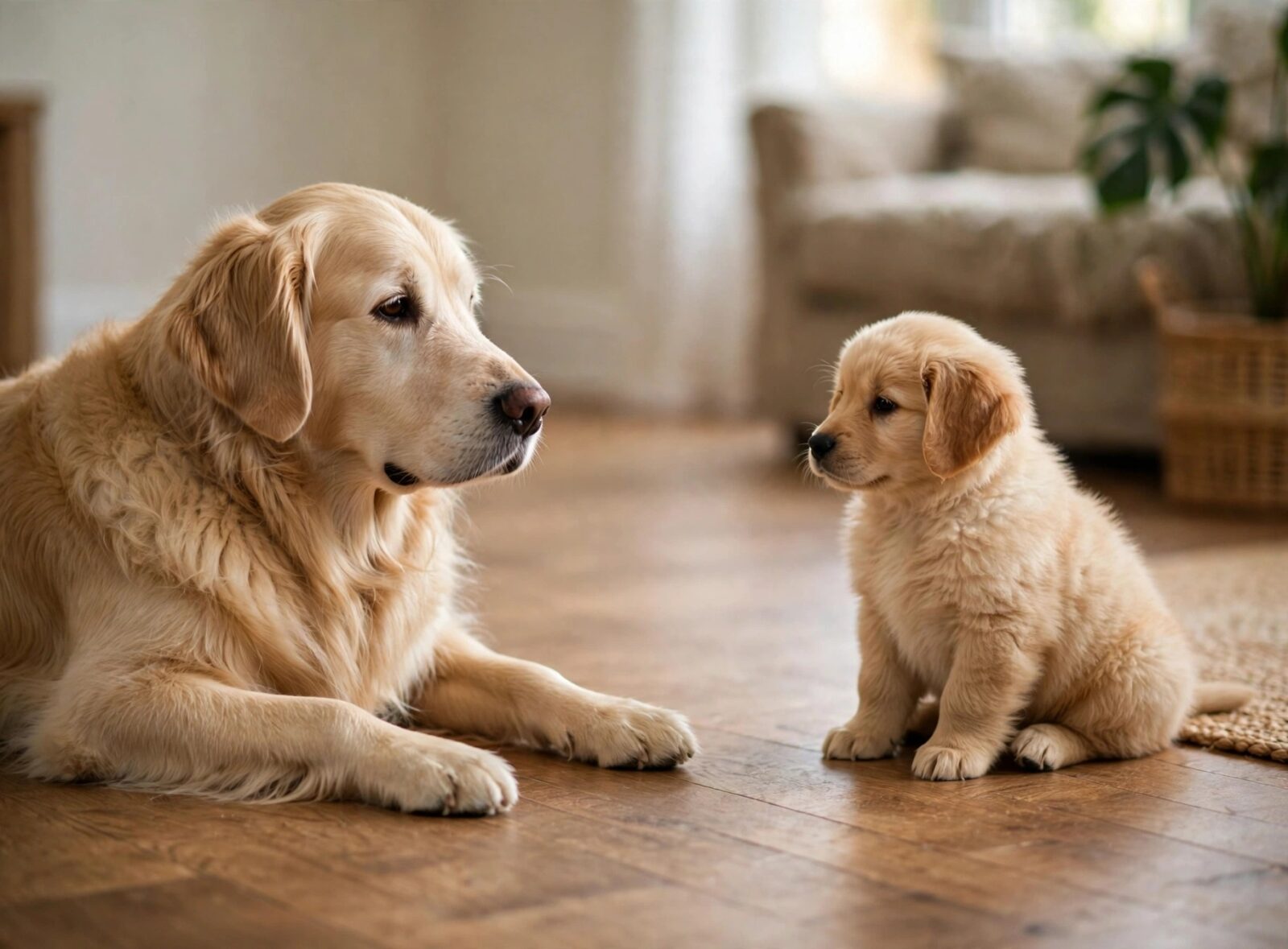
Age matters because puppies regulate temperature less efficiently than adults. A puppy under four months old needs more protection than the same dog will need at two years. A puppy who would not need a coat as an adult may still need one this winter.
| Breed type | Needs a coat? | Notes |
| Double-coated northern breeds | No | Coat can cause overheating |
| German Shepherd, Golden, Bernese | No | Well insulated naturally |
| Labrador, most retrievers | Usually not | May want one below 15°F |
| Thick-coated doodles, unclipped | Usually not | Clipped short changes the answer |
| Beagle, Corgi, medium short coats | Sometimes | Below about 30°F |
| Boxer, Pit Bull type, Weimaraner | Yes | Single coat, no insulation |
| Greyhound, Whippet | Yes | Minimal coat and low body fat |
| Yorkie, Chihuahua, Maltese, Pom | Yes | Small mass, fast heat loss |
| Dachshund | Yes | Low body, belly close to snow |
| Any puppy under 4 months | Usually yes | Immature temperature regulation |
| Any recently clipped dog | Yes | Insulation removed |
| Senior or health-compromised dogs | Yes | Reduced tolerance |
A practical rule: if your puppy is shivering, lifting paws repeatedly, or trying to turn back toward the house, they are cold regardless of what any chart says. Dogs communicate this clearly if you watch for it.
Not all winter coats do the same job, and the most common mistake is buying a fashion coat for genuinely cold conditions.
What to look for:
Coverage from the base of the neck to the base of the tail, and crucially, belly coverage. A coat that only covers the back leaves the belly exposed, and for a Dachshund or any low-slung breed the belly is the part closest to snow and ice. Belly panels matter more than back length.
Water resistance on the outer layer. Kansas City winter is as often wet as it is dry, and a soaked fleece coat makes a puppy colder rather than warmer. Fleece alone is for indoor warmth or dry cold; for anything wet you need a water-resistant shell.
A harness opening, so you can use the harness under or through the coat rather than over it.
Easy on and off. A coat requiring three legs to be threaded through sleeves while a puppy wriggles will not get used. Step-in or wrap-around designs with velcro get used daily; complicated ones get abandoned by week two.
Reflective trim. In December, Kansas City is dark before five and after seven. This is a safety feature rather than a nice touch.
Fit check: two fingers should slide under the coat at the neck and chest. The coat should not restrict shoulder movement at all. Watch your puppy walk in it before you commit, since a coat that pinches the armpits will cause chafing within a week.
On sizing for growth: buy for the current size, not the expected adult size. A coat that is too large slides, gaps and lets cold air through, which defeats the purpose. A puppy will need two coats before reaching adulthood, which is simply the cost of the thing. Budget $25 to $45 for the first one.
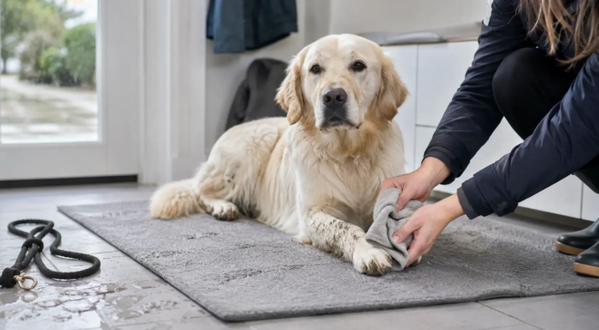
This is where the serious winter problems happen, and it gets far less attention than coats.
The Kansas City metro salts heavily. Rock salt and the chloride-based de-icers used on sidewalks cause three distinct problems:
Chemical irritation. Salt dries and cracks paw pads, and cracked pads sting on contact with more salt. It builds into a cycle.
Ingestion. A puppy who licks their paws after a walk ingests the residue, which causes mouth irritation and digestive upset. Some commercial de-icers are considerably more toxic than plain rock salt.
Burning sensation. Certain de-icers generate heat on contact with moisture, which is unpleasant on bare pads.
The fix is straightforward and non-negotiable: wipe or rinse your puppy’s paws after every single winter walk. Keep a bowl of lukewarm water and a towel by the door, or use unscented pet wipes. Get between the toes, which is where residue collects. This takes thirty seconds and prevents the overwhelming majority of winter paw problems.
Snow packs into the fur between the toes and compresses into hard ice balls, which are painful and cause limping. Longer-coated breeds and doodles are most affected.
Prevention: trim the fur between the paw pads short. Not the pads themselves, just the fur growing between them. A groomer will do this, or small blunt-nosed scissors handle it at home. Check and clear the paws mid-walk on snowy days.
A wax-based paw balm applied before walks creates a barrier against salt and reduces moisture loss. Applied after walks it helps cracked pads heal. It is a $10 to $15 item that does more good per dollar than almost anything else on this list, and it works on puppies who refuse boots.
Most dogs dislike boots, most boots fall off, and most puppies do not need them.
Boots are genuinely worth it for: dogs with already-cracked or injured pads, dogs walking long distances on heavily salted routes, dogs with pad sensitivity, and extended time in deep snow.
Boots are not worth it for: short neighborhood walks where paw wiping and balm handle the problem perfectly well.
If you do buy them, measure the paw rather than guessing by weight. Look for a flexible sole, a secure strap above the ankle joint, and a snug fit. Introduce them indoors over a week in short sessions with treats before expecting your puppy to walk outside in them. A puppy who has boots forced on in the driveway on day one will fight them forever.
Walk duration.
A puppy’s cold tolerance is a function of time as much as temperature. A ten-minute walk at 25°F is fine for most puppies in appropriate gear. A forty-minute walk at the same temperature is not.
Rough guidance for a healthy puppy over four months, in appropriate gear:
| Temperature | Small breed | Medium breed | Large double-coated |
| Above 45°F | Normal walk | Normal walk | Normal walk |
| 32 to 45°F | 20 to 30 min | 30 to 45 min | Normal walk |
| 20 to 32°F | 10 to 15 min | 20 to 30 min | 30 to 45 min |
| 10 to 20°F | 5 to 10 min | 10 to 15 min | 20 to 30 min |
| Below 10°F | Potty only | 5 to 10 min | 10 to 15 min |
| Below 0°F or high wind chill | Potty only | Potty only | Potty only |
Wind chill counts. A 20°F day with a 20 mph wind, which Kansas City produces regularly, is functionally much colder for a dog close to the ground.
Puppies under four months should be at the shorter end of every range, and puppies under three months should mostly be doing brief potty trips rather than walks in genuine cold.
When walks get cut short, the energy has to go somewhere. Indoor enrichment is the answer: puzzle feeders, scent games where you hide treats around a room, short training sessions, tug in a hallway. Fifteen minutes of nose work tires a puppy more thoroughly than thirty minutes of walking, which is a useful thing to know in January. 3 Indoor Games to Keep Your Dog Entertained This Winter has several options that work well for a puppy with energy and nowhere to put it.
Essential:
Useful:
Only if needed:
Skip:
Our guide to Best Ways to Keep Your Dog Warm in the Winter covers the indoor side of winter comfort, which matters as much as the outdoor gear once temperatures drop and your home’s floor-level temperature turns out to be colder than the thermostat suggests.
Turn around and go home if you see:
None of these require interpretation. A puppy who is cold or uncomfortable says so clearly, and the appropriate response is to go inside rather than to finish the planned route.
For the broader winter health picture, including dry skin, reduced water intake and the seasonal issues that come with indoor heating, Tips for Keeping Your Pup Healthy in the Winter is worth reading at the start of the season rather than in February.
Sensible winter dog gear for a puppy comes down to three purchases and one habit. Buy a water-resistant coat with belly coverage if your puppy’s coat type and size call for one. Buy paw balm. Buy a reflective harness or light, because Kansas City is dark for most of the walkable hours in December. Then build the habit of wiping paws after every walk, which prevents more winter problems than every product combined.
Skip the boots unless your puppy specifically needs them. Shorten walks before you add layers. And trust your puppy’s signals over any temperature chart, because a shivering dog is cold no matter what the breed guidance says.
Bringing a puppy home this winter in the Kansas City area? The team at Petland Kansas City can tell you about your specific puppy’s coat type and expected adult size, which is what actually determines whether you need a coat at all. Visit us in Overland Park, meet the puppies, and bring your questions.
Does my puppy really need a winter coat in Kansas City?
It depends on coat type and size. Double-coated breeds like Huskies, German Shepherds and Bernese Mountain Dogs do not need one and can overheat in one. Single-coated breeds such as Boxers, Greyhounds and Pit Bull types, plus all toy breeds, genuinely do. Any puppy under four months old needs more protection than the same dog will as an adult, because temperature regulation is still developing.
Are dog boots worth buying?
For most puppies on short neighborhood walks, no. Paw balm before the walk and a thorough paw wipe afterward handle the salt problem effectively. Boots earn their place when a dog has cracked or injured pads, walks long distances on heavily salted routes, or spends extended time in deep snow. If you buy them, measure the paw and introduce them indoors over a week rather than outside on day one.
How do I protect my puppy’s paws from road salt?
Apply a wax-based paw balm before walks to create a barrier, and wipe or rinse the paws thoroughly after every walk, getting between the toes where residue collects. Keep a bowl of lukewarm water and a towel by the door. Also trim the fur between the paw pads, which prevents ice balls from forming. This routine takes about thirty seconds and prevents nearly all winter paw problems.
How long can a puppy be outside in cold weather?
For a healthy puppy over four months in appropriate gear: roughly 10 to 15 minutes for a small breed at 20 to 32°F, 20 to 30 minutes for a medium breed, and 30 to 45 minutes for a large double-coated breed. Below 10°F, small breeds should be doing potty trips only. Puppies under four months need the shorter end of every range, and wind chill shortens all of these figures.
What temperature is too cold to walk a puppy?
Below 20°F is marginal for most puppies and below 10°F should be potty trips only for small and single-coated breeds. Factor in wind chill, which Kansas City produces generously. More useful than any number: watch your puppy. Shivering, lifted paws, slowing down or turning toward home all mean go inside, regardless of what the thermometer says.
Should I put a coat on my Husky or German Shepherd?
No. Double-coated northern breeds have a dense insulating undercoat beneath a weather-resistant outer layer, which is a genuinely effective natural system. Adding a coat can trap heat and cause overheating, and it can also compress the undercoat, reducing its insulating effect. These breeds are comfortable in a Kansas City winter without any gear.
My puppy’s walks are too short now. How do I burn off their energy? Indoor enrichment, which is more effective than most people expect. Puzzle feeders, scatter-feeding meals across a room, scent games where you hide treats for the puppy to find, short training sessions, and tug in a hallway. Fifteen minutes of nose work tires a puppy out more thoroughly than thirty minutes of walking, because mental work is genuinely demanding for a young dog.
"*" indicates required fields