Menu
Download our Petland App today for information on your local Petland's Available Pets and Pet Supplies. All at the tips of your fingers!


Download our Petland App today for information on your local Petland's Available Pets and Pet Supplies. All at the tips of your fingers!
Please create a free account below, or login by clicking here.
Petland Overland Park, Kansas
November 23, 2026
Ask around and you will hear that a tired puppy just falls asleep, the way a phone dies when the battery runs out. It makes a good story and a bad first month. Puppies do not power down on their own; an overtired puppy is usually the wildest animal in the house at 10 p.m., biting sleeves and racing laps around the coffee table. A puppy bedtime routine is how you teach a young dog that evenings end the same way every night, in the same order, until his body starts getting sleepy on schedule by itself.
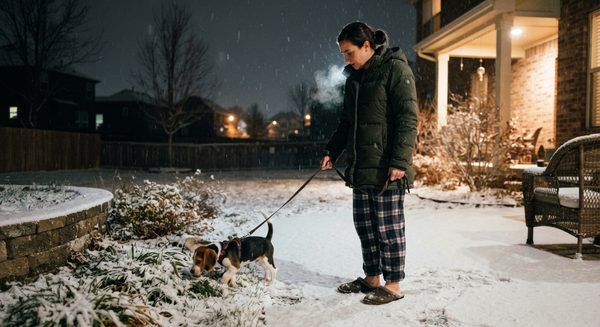
The routine itself is not complicated: a last meal early enough to digest, play that ends before the wild hour, a wind-down with lights and voices dropping, a final potty trip, and a crate that means sleep. What matters is the order and the timing, repeated within about 15 minutes every night. In Overland Park in December, that last trip outside happens in real cold, so the routine also needs a winter plan: your coat and boots by the door, five minutes outside, done.
One promise before the details: you are not aiming for silence on night one. You are aiming for a sequence so predictable that by night ten the puppy starts yawning at the wind-down steps. Consistency, not intensity, is the whole technique.
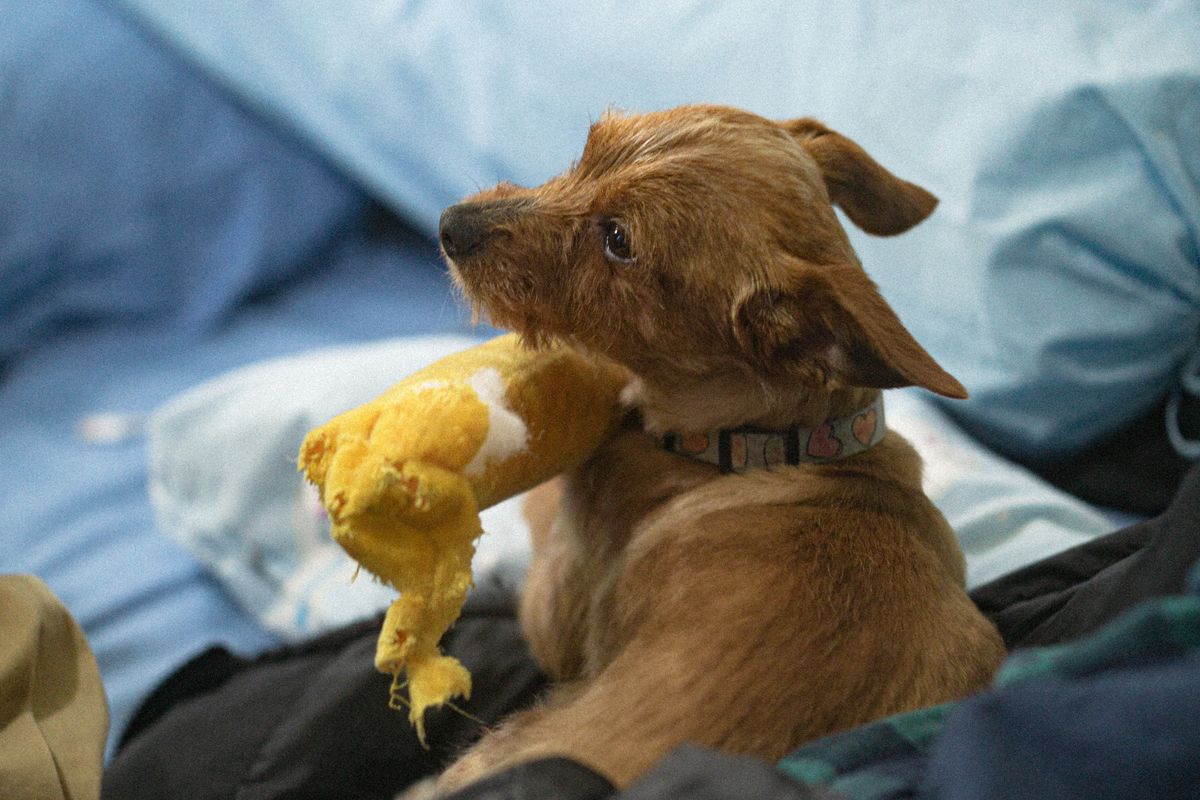
The numbers surprise people. Puppies from 8 to 12 weeks sleep 18 to 20 hours a day. From 3 to 6 months, plan on 16 to 18 hours, with night sleep stretching into longer blocks. Even adult dogs sleep 12 to 14 hours a day. Our dogs like to sleep is more than a cute observation from the store team; sleep is when puppies process the day’s training and when growing bodies do their work. A puppy kept awake too long in the evening does not get extra socialized. He gets wired and mouthy, and then his owners blame the puppy for what is really a scheduling problem.
At 8 to 10 weeks, most puppies physically cannot hold it all night. The one-hour-per-month rule means a two-month-old tops out around 2 to 3 hours, so expect 1 to 2 night wakings at first. By 12 to 16 weeks many puppies manage one waking or none, and most sleep through, roughly 10 p.m. to 6 a.m., somewhere between 4 and 6 months old. Keep every night trip boring: leash on, potty spot, quiet praise, straight back to the crate. No play, no snack, no tour of the kitchen lights. Boring nights teach a puppy that 2 a.m. is for sleeping.
Here is a sample evening for a puppy heading toward a 10:15 p.m. bedtime. Shift every step earlier or later to fit your household, but keep the gaps between the steps the same, because the gaps are what the puppy learns.
| Time | Activity | Why It Works |
| 6:00 p.m. | Dinner, measured | Digestion finishes well before bed, so the last potty trip counts |
| 6:15 p.m. | Potty trip, then free play | Empties the tank right as the post-meal urge hits |
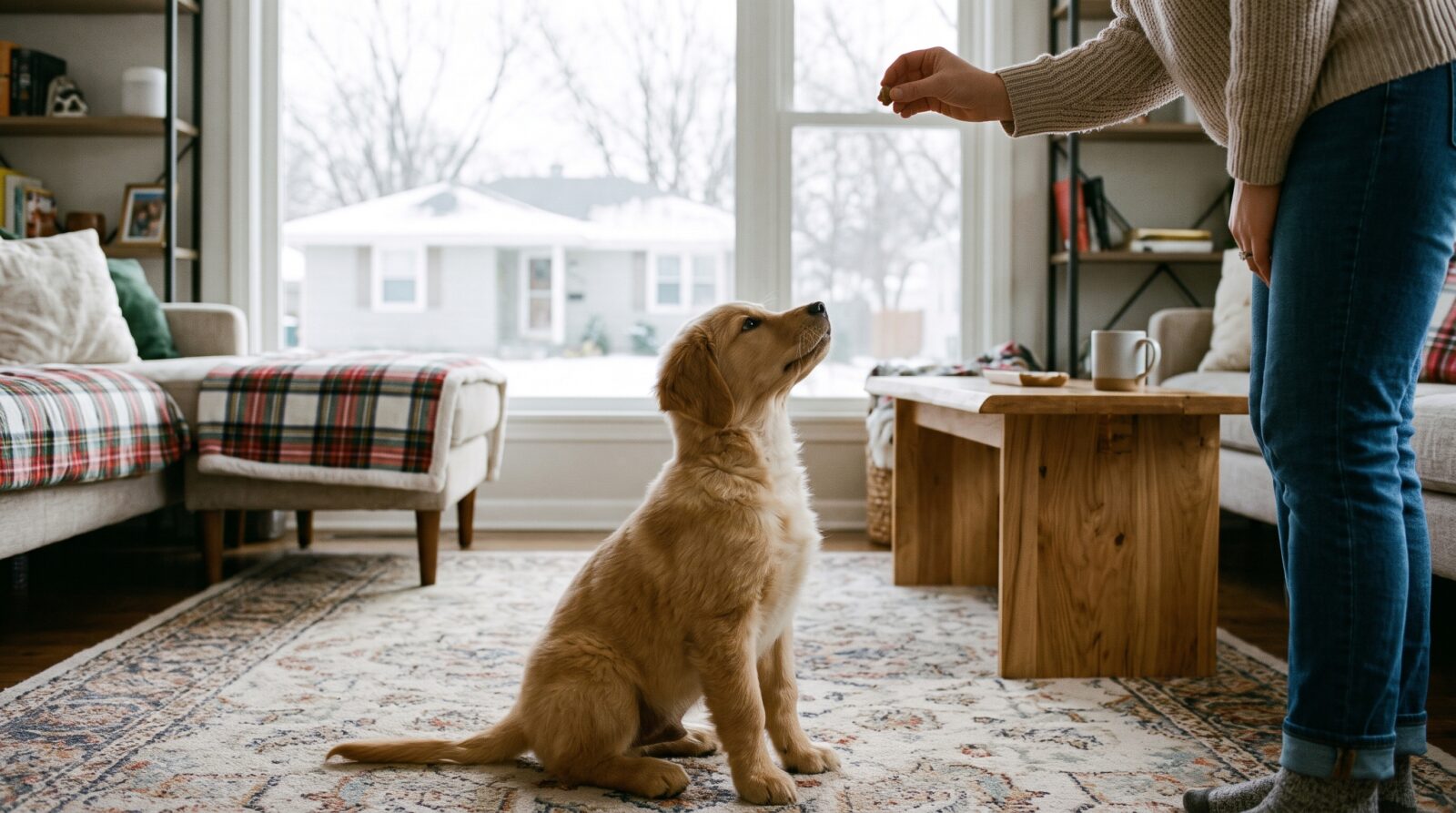
| 7:00 p.m. | Play and five minutes of training | Burns energy while he can still think and learn |
| 8:30 p.m. | Calm chew, lights and television lower | Starts the dimmer switch instead of a sudden off |
| 9:15 p.m. | Last water, then the bowl goes up | A full bladder at 10 rarely stays full until 6 |
| 10:00 p.m. | Final potty trip, same spot every night | One last empty bladder is the whole night plan |
| 10:15 p.m. | Crate, a quiet word, lights out | Same last steps nightly become the sleep signal |
If your puppy still wakes twice overnight, this timeline is still right. The bladder catches up within a few weeks.
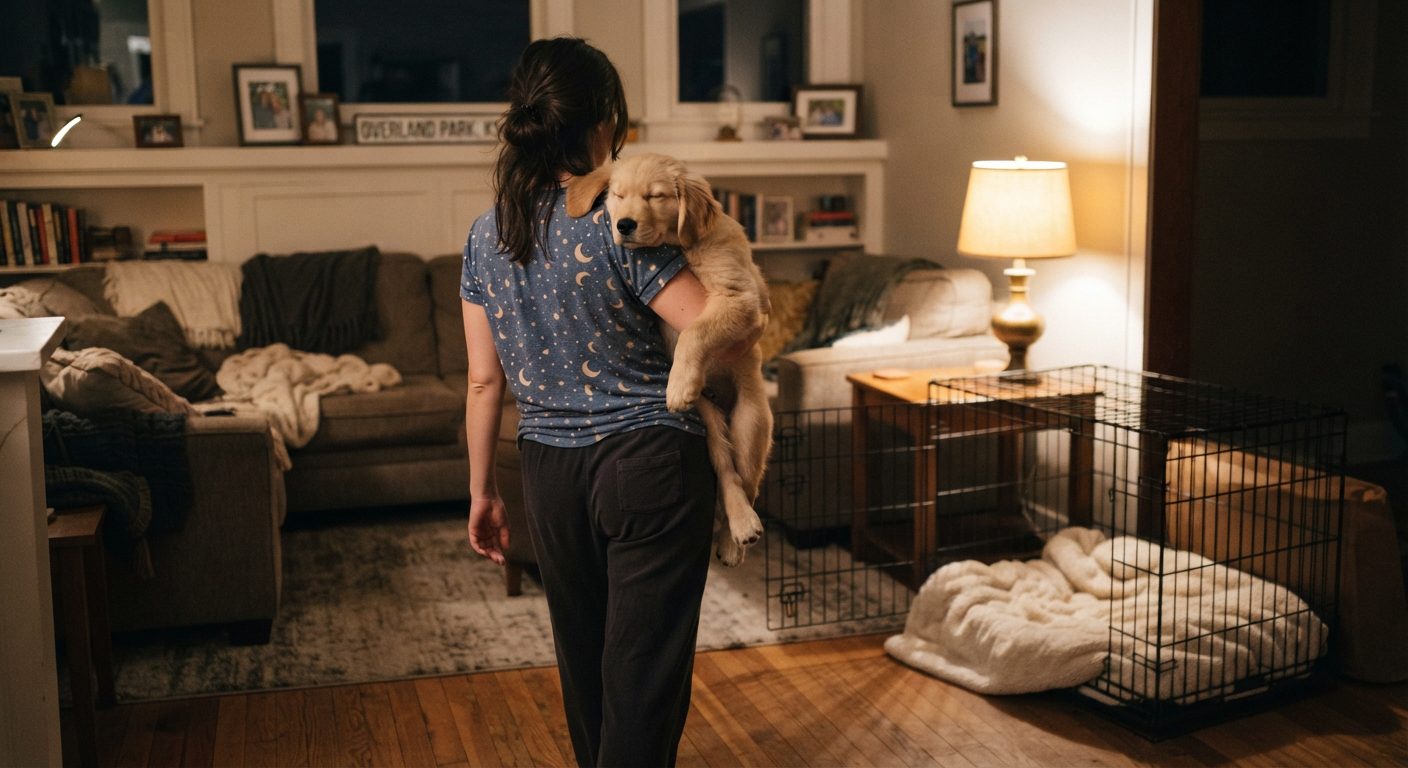
The hour before bed decides the night. A puppy bedtime routine works like a dimmer switch, not a light switch: energy should step down in stages, never from full play to dark crate in one jump. End rough play by 8:30, switch to a chew or a slow grooming session, lower the lights, and drop your own voice and pace. Puppies read the room. A household that stays loud, bright, and busy until 10 is telling the puppy the evening is still on, and he will believe the household over the crate every time.
Send the same signals on purpose. Pajamas for the kids, the television off, the same short walk to the same potty spot, the same cue word at the crate. None of these steps matters alone; together they become a sentence the puppy understands: the day is over. If evenings in your house genuinely run late, start the wind-down later rather than skipping it, and protect at least 45 minutes of stepping down. A rushed ten-minute wind-down after a wild evening is the single most common reason bedtime routines fail in the first two weeks.
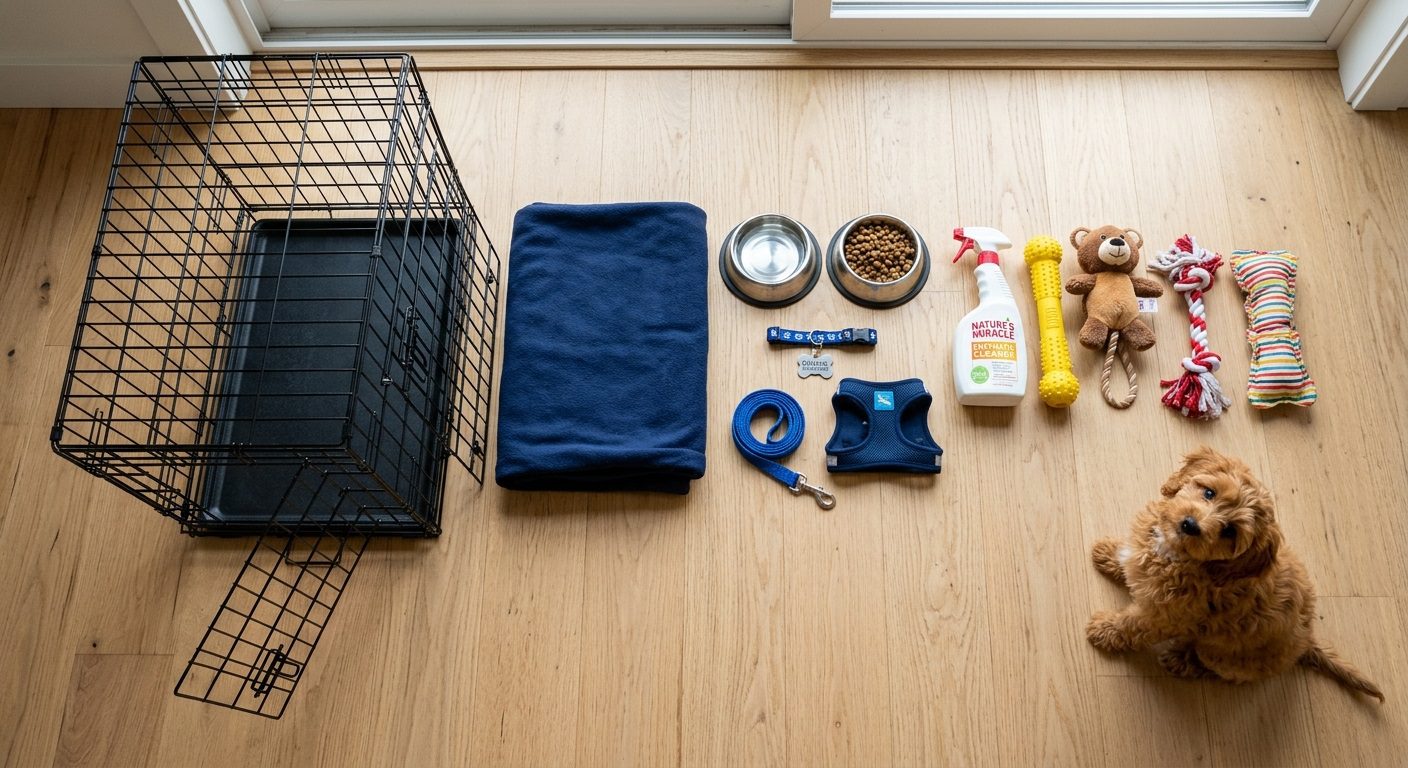
The crate should already mean good things long before bedtime arrives. If your puppy is still learning that, the benefits of crate training a dog are worth a read: meals fed in the crate, chew toys that only appear there, and short daytime naps inside it build the association that makes nights quiet. Place the crate near your bed for the first weeks so the puppy can hear you, make it den-like and calm, and use one consistent cue, like the word bedtime, said the same way every single night.
Kansas winters make owners want to load the crate with warmth. Resist most of it. A healthy puppy in a heated home needs a normal sleeping-temperature room, a dry fitted blanket or crate mat he cannot bunch into a ball, and a crate placed out of drafts, not a pile of equipment. Skip heating pads, electric blankets, and hot water bottles in the crate: puppies chew, and a chewed cord or a leaking bottle is far worse than a cool room. Small breeds who shiver on the 10 p.m. potty trip do better with a fitted dog sweater worn for the trip itself, then come back indoors to a plain, safe crate. Wipe salty paws when you come in, and the night is done.
This guide publishes on December 25, so let us be honest about tonight: guests in the kitchen, a late dinner, kids running on sugar, and a puppy in the middle of all of it. Do not skip the routine; shift it and shrink the audience. Feed dinner at 6 as usual, run the same steps in the same order, and put the puppy to bed in a quiet room away from the party, even if bedtime lands an hour later than usual. Assign one adult as the puppy person for the night, so potty signals do not get lost in the noise and nobody double-feeds the cute beggar under the table.
Let the puppy meet guests early in the evening, while he is fresh and the house is calmer, then retire him before he is overtired rather than passing him around until he crashes. Visitors always want one more cuddle; the routine says the puppy’s evening ends on puppy time. A puppy who keeps his schedule through one loud holiday learns the schedule holds everywhere, and that is the entire point of building one. Tomorrow night, back at home, the usual 10:15 bedtime will feel easy by comparison.
The timeline is not permanent; it grows up with the puppy. Around 4 months, most puppies can drop the 9:15 water rule and stretch the last potty trip to a single 10 p.m. outing. Around 6 months, dinner can move to twice-daily feeding for many breeds, which shifts the whole evening about half an hour earlier. Change one step at a time and give each change three nights before judging it. A routine you adjust gradually stays a routine; one you rebuild every week is just a series of experiments the puppy has to decode.
A puppy bedtime routine is not about finding a magical bedtime. It is about the same six or seven steps, in the same order, at roughly the same times, until your puppy’s body starts winding down before you do. Protect the wind-down hour, keep the last potty trip short and warm in the Kansas winter, and let boring nights do their quiet work. Most families see a real change within 7 to 10 nights: less crate complaining, faster settling, and mornings that start when you say they do.
Setting up your first crate and evening schedule? Visit Petland Kansas City in Overland Park, browse the puppies available now, and ask the team to help you size a crate and sketch a bedtime routine for the breed you choose. Bring your household’s real schedule with you. The best routine is the one built around your actual evenings, not an ideal one.
Pick a bedtime you can hold within about 15 minutes every night, often between 9:30 and 10:30 p.m. The exact hour matters far less than consistency and the wind-down hour in front of it.
Most puppies manage one waking or none by 12 to 16 weeks, and sleep fully through somewhere between 4 and 6 months. Bladder size, not stubbornness, sets the early timeline.
Yes, during the first weeks. A quick, boring 10 p.m. trip while he is half asleep buys a much longer stretch of night sleep than letting him wake you at 1 a.m. with a full bladder.
Near your bed for the first few weeks, so the puppy can hear and smell you nearby. Once he is sleeping through most nights, you can move it gradually, a few feet at a time, to its permanent spot.
Assume the bladder first: leash on, potty spot, quiet praise, straight back to the crate. If he was just out and keeps fussing, give him a few minutes before responding; many puppies resettle on their own.
Shift it, do not skip it. Move every step an hour later if the household is up late, keep the order identical, and put the crate in the quietest room available. The sequence is the signal, not the clock.

"*" indicates required fields