Menu
Download our Petland App today for information on your local Petland's Available Pets and Pet Supplies. All at the tips of your fingers!


Download our Petland App today for information on your local Petland's Available Pets and Pet Supplies. All at the tips of your fingers!
Please create a free account below, or login by clicking here.
Petland Overland Park, Kansas
August 30, 2026
If you have ever walked into your bedroom and found one sock missing from a pair, there’s a good chance your furry thief is responsible. Dog stealing socks is one of those weird but surprisingly common behaviors that leaves pet owners confused. Why socks? Why not shoes, towels, or something less specific? The answer is actually more interesting than most people expect.
Dogs experience the world very differently than humans. While we rely heavily on sight, dogs depend on scent. A sock, especially one you’ve worn all day, carries a concentrated version of your smell. To your dog, that sock is almost like a tiny emotional package filled with information about you—where you’ve been, what you’ve done, and most importantly, your comforting scent. That makes socks incredibly valuable in a dog’s mind.
The texture of socks also matters. They are soft, stretchy, and easy to grab with the mouth. From a dog’s perspective, a sock feels like the perfect toy. It’s light enough to carry around and fun enough to chew. That combination of scent and texture explains why many dogs become obsessed with them.
Think about what a sock represents to your dog. It’s soft like a plush toy, smells like their favorite human, and is usually easy to find. That’s basically the jackpot for a curious canine. Your dog isn’t trying to annoy you—at least not intentionally. They’re responding to something that feels rewarding.
The scent factor is huge. Dogs have around 220 million scent receptors, while humans have only about 5 million. That difference is massive. It means your dog can detect layers of scent that you cannot even imagine. Your sweaty sock may smell unpleasant to you, but to your dog, it’s fascinating.
Socks also carry emotional value. Dogs are social animals that bond strongly with their humans. When you leave home, your scent remains behind on clothing. Many dogs seek that scent for reassurance. Carrying your sock around may actually help them feel connected to you.
Some dogs even treat socks like trophies. They steal one, run away dramatically, and wait for you to react. Sound familiar? That reaction matters more than you might think.
Even the most pampered dog still carries ancient instincts. Thousands of years of domestication didn’t erase natural behaviors completely. Some cases of dog stealing socks are linked directly to instinct.
Dogs descended from wolves, and while modern dogs are far removed from wild pack hunting, some prey-drive behaviors remain. Chasing, grabbing, and carrying objects are all instinctive actions. A dangling sock hanging from a laundry basket can trigger that response instantly. It moves, swings, and looks “catchable.”
Retrievers are especially known for carrying objects in their mouths. Breeds like Labrador Retriever and Golden Retriever were bred specifically to retrieve items gently. That instinct doesn’t disappear indoors. If your retriever constantly steals socks, they may simply be expressing inherited behavior.
Behavior isn’t always about instinct. Emotions often play a bigger role than people realize. Dogs feel excitement, stress, comfort, and loneliness. These emotional states can influence sock stealing.
One major reason is comfort. Your scent calms your dog. This is especially true for dogs with separation anxiety. When you’re away, they may search for something carrying your smell. Socks are usually easier to access than shirts or jackets, making them the first choice.
Attention-seeking is another big reason. Dogs are incredibly smart when it comes to human behavior. If stealing a sock gets an instant reaction—chasing, shouting, bargaining—they learn quickly that socks equal attention.
Imagine your dog thinking: “Every time I grab this weird cloth, my human suddenly becomes very interested in me.” That’s powerful reinforcement.
Sometimes the real issue isn’t the sock—it’s what the sock represents. A mentally under-stimulated dog will create entertainment. Sock theft can become a self-made game.
Dogs need both physical exercise and mental stimulation. A daily walk is helpful, but for many breeds, it isn’t enough. Intelligent breeds especially need challenges. Without enrichment, they invent activities. Sock stealing becomes one of them.
Signs boredom may be causing the behavior include:
| Behavior | Possible Meaning |
| Stealing socks daily | Seeking stimulation |
| Chewing household items | Excess energy |
| Zoomies indoors | Physical energy overload |
| Barking excessively | Frustration |
Stress can trigger the same behavior. Changes in routine, moving homes, loud noises, or new pets can increase anxiety. Dogs often cope through repetitive behaviors like chewing or stealing.
A stressed dog may obsess over socks because chewing releases calming chemicals in the brain. It becomes a self-soothing ritual. That’s why understanding context matters. Ask yourself: Has anything changed recently in your dog’s environment?
The answer might reveal the root cause.
At first, dog stealing socks sounds funny. Social media is full of dogs proudly carrying stolen laundry. But there’s a serious side to this behavior.
The biggest danger is swallowing the sock. Some dogs don’t stop at chewing—they ingest fabric. That can lead to choking or intestinal blockage, both of which are emergencies.
A swallowed sock can get stuck in the stomach or intestines, preventing food from passing through. Symptoms may include:
If you suspect your dog swallowed a sock, contact a veterinarian immediately. Do not wait for symptoms to worsen.
Small dogs face higher choking risk, but large dogs aren’t safe either. In fact, larger dogs may swallow socks whole more easily. That makes the danger surprisingly universal.
So while the behavior may look silly, it deserves attention if your dog tends to chew aggressively or swallow objects.
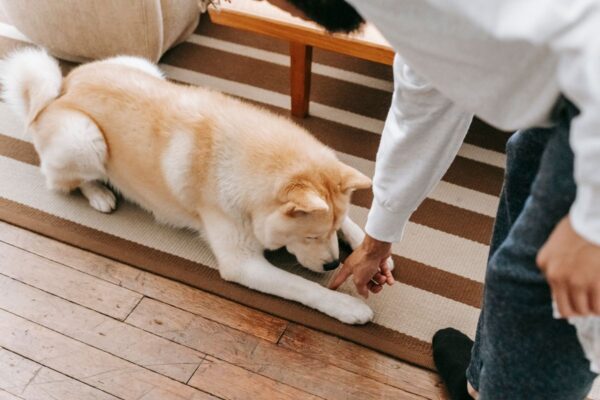
The good news? You can absolutely reduce or stop this habit. The solution combines prevention, training, and enrichment.
First, manage the environment. This sounds obvious, but it works. Keep socks off the floor. Use closed laundry baskets. Limit access to bedrooms if needed. Prevention removes temptation.
Second, teach “drop it” and “leave it.” These commands are incredibly valuable. Reward your dog heavily when they release objects voluntarily. Use treats, praise, or favorite toys. Make giving up the sock feel rewarding.
Avoid chasing. Chasing turns theft into a game. Instead, stay calm and redirect your dog toward something better.
Toy replacement works well too. Give your dog appealing alternatives that satisfy chewing and carrying instincts. Good options include:
If your dog loves your scent, try sleeping with a safe dog blanket for a night before giving it to them. That offers comfort without risking sock swallowing.
Exercise also matters. A tired dog makes fewer bad decisions. More walks, training games, sniffing activities, and interactive play can dramatically reduce sock theft.
Consistency is everything. If stealing works sometimes, your dog will keep trying.
Occasional sock stealing is usually harmless mischief. Persistent obsession, aggression around stolen items, or swallowing fabric is different.
Consider professional help if your dog:
A veterinarian can rule out medical issues such as pica, a condition involving eating non-food objects. A certified dog trainer or veterinary behaviorist can also identify emotional triggers.
Early intervention matters. Habits become harder to break the longer they continue.
So, why is your dog obsessed with stealing socks? The answer usually comes down to a mix of instinct, scent attraction, comfort, boredom, and learned behavior. Your socks smell like you, feel satisfying to carry, and often trigger entertaining reactions. From your dog’s perspective, socks are premium treasure.
Dirty socks have the strongest scent, making them more appealing and comforting to dogs.
It can be. Dogs with separation anxiety often seek items carrying their owner’s scent.
They may see it as a chase game because your reaction reinforces the behavior.
No. Punishment can create fear and worsen behavior. Use redirection and reward-based training instead.
Retrievers, herding breeds, and highly energetic dogs often show this behavior more due to strong carrying instincts.

"*" indicates required fields