Menu
Download our Petland App today for information on your local Petland's Available Pets and Pet Supplies. All at the tips of your fingers!


Download our Petland App today for information on your local Petland's Available Pets and Pet Supplies. All at the tips of your fingers!
Please create a free account below, or login by clicking here.
Petland Overland Park, Kansas
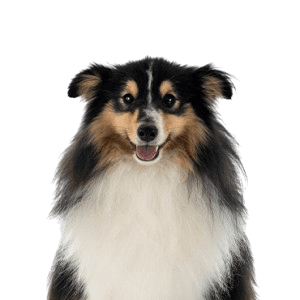
The Shetland Sheepdog can also be called the Sheltie. The Sheltie is a breeding dog that originates from the Scottish Shetland Islands.
Controversy trailed the nomenclature of the breed initially as ‘Shetland Collie’, this name format wasn’t accepted by the Rough collie breeders. It is a very hard-working small dog that is vocal, excitable, intelligent, and willing to please.
The Shetland Sheepdog is a breeding by-product of the crossing between mainland working collies that were conveyed to England. Later on, it was extensively crossed with the Rough Collie and other breeds. Other Breeds such as King Charles Spaniel, The Pomeranian, Border collie, and the extinct Greenland yakki.
The Shetland Sheepdog is a highly intelligent breed. Research done by Dr. Stanley Coren shows that the Sheltie has a 6th out of 8th ranking for intelligent dogs. Shelties are very good at understanding instructions. The sheltie will master a command given to it within 5 repetitions and subsequently respond to that command accordingly.
The Shetland Sheepdog is a breed of dog that is great in the home front. It is an ideal dog for a quiet family. It is very sensitive to manic sounds and this can seriously lead to some friction between the dog and the occupants of the home environment.
Shelties get along quite well with kids; however, they should be made to get along with older kids to avoid a frosty relationship with toddlers. Toddlers are quite inquisitive, so one false move might lead to a counterproductive situation. Also, a well-fenced home is an ideal environment for the Sheltie to thrive in and engage in some physical activities.
Exercise is important for this dog breed. An important role exercise plays is that it helps to improve any dog breed’s health. The Sheltie is a very athletic dog that loves to run around and play. At least one hour of exercise daily is a good regimen for the Sheltie. Shelties can perform tasks for as long as you require them to, they are highly sociable and are usually happy when they have been giving a task to complete.
Grooming the Shetland Sheepdog can be quite tedious. Committing yourself to the grooming of a Sheltie for the first time requires endurance and diligence. For a Sheltie owner to properly groom the Sheltie, the skill of handling a brush is required to brush deep down to the core. Brushing the coats keeps the coat healthy, this subsequently prevents matting. You should note that the nature of the soft hair makes it prone to entanglement, so it is advisable to engage in regular brushing to keep the couch fur-free.
Shetland Sheepdogs are intelligent, affectionate, and loyal dogs. They are known for their gentle nature and strong bond with their families. Shelties are also alert and protective, making them excellent watchdogs.
Shetland Sheepdogs are active dogs that require daily exercise to stay happy and healthy. Walks, playtime, and mentally stimulating activities such as agility or obedience training are ideal for keeping them engaged.
Yes, Shetland Sheepdogs are highly intelligent and eager to please, making them very trainable. They excel in obedience, agility, and trick training. Positive reinforcement and consistency are key to helping them thrive.
Yes, they seldom bark! The shelties can be very vocal and at the same time, they can be reserved. Socialization should always be incorporated into their developmental stage to boost their confidence.
The Shetland Sheepdogs are highly sensitive and require more level of socialization than most breeds. They are highly responsive, attentive and easy to train. This depends on the texture of your voice. If your voice is manic, it tends to act erratically.
Sheltie’s personality trait plays a bigger role in its relationship with the family. They are sweet, loving, playful, gentle, affectionate and a joy to watch. When strangers come around, their guard dog instinct comes into effect with loud barks, to signal to its owner that an intruder is around.
The Shetland Sheepdog has a lifespan of 12 – 13 years.
If cuddling is a guilty pleasure, then Yes! Shelties love a good old-fashioned cuddle. They love sitting on your laps and waiting for your fingers to work their magic on their belly and their fur, talk about a five-star treatment! They are very loyal to their owners but are highly reserved towards strangers, this makes the bond between dog owner and dog, “extra special.”
Training requires patience on the owner’s part, but the Sheltie makes up for that with its ability to assimilate the commands given to it quicker than other dog breeds. With time, training your Sheltie will get easier because of their eagerness to please and loving nature.
Yes, they are! Collies and Shelties are descendants of Border collies; However, they are completely different dogs.
Shelties are like clockwork. They’re always fired up to go, even when you have ended their exercise session. An exercise session of an hour daily is required for this dog breed.
Sheltie pass away from health conditions such as impaired vision or blindness, and hereditary eye diseases. Epileptic bouts and heart diseases are very serious threats to a Sheltie’s life. The severe blood-clotting disease is also a threat to the life of a Sheltie.


GOODTrustindex verifies that the original source of the review is Google. My bulldog is loving his new home. Thanks!Posted onTrustindex verifies that the original source of the review is Google. We had Jacob help us and we had the most adorable puppies Proper enjoyed the experiencePosted onTrustindex verifies that the original source of the review is Google. Jacob was very kind and caring with the animals and had great service!Posted onTrustindex verifies that the original source of the review is Google. Jacob who was working when I went was super nice and very helpful! And the puppies were so cute :)Posted onTrustindex verifies that the original source of the review is Google. Friendly staffPosted onTrustindex verifies that the original source of the review is Google. I had a wonderful experience at Petland! I came in hoping to see one of the puppies, and thanks to Sabrina, it was such an enjoyable visit. She was incredibly friendly, professional, and made the whole process smooth and stress-free. Sabrina took the time to answer all my questions and made sure I had a chance to really connect with the dog. You can tell she genuinely cares about the animals and the customers. Her positive attitude made the visit even more special. Thank you, Sabrina, for your amazing help—I’ll definitely be back!Posted onTrustindex verifies that the original source of the review is Google. great service by Jacob
"*" indicates required fields
"*" indicates required fields